A cookbook gets heavy use: it lies open on the worktop, catches splashes and is opened a hundred times. If you want to have a cookbook printed, a binding that lies flat and kitchen-proof paper are the most important choices. Here you can read what to look out for.
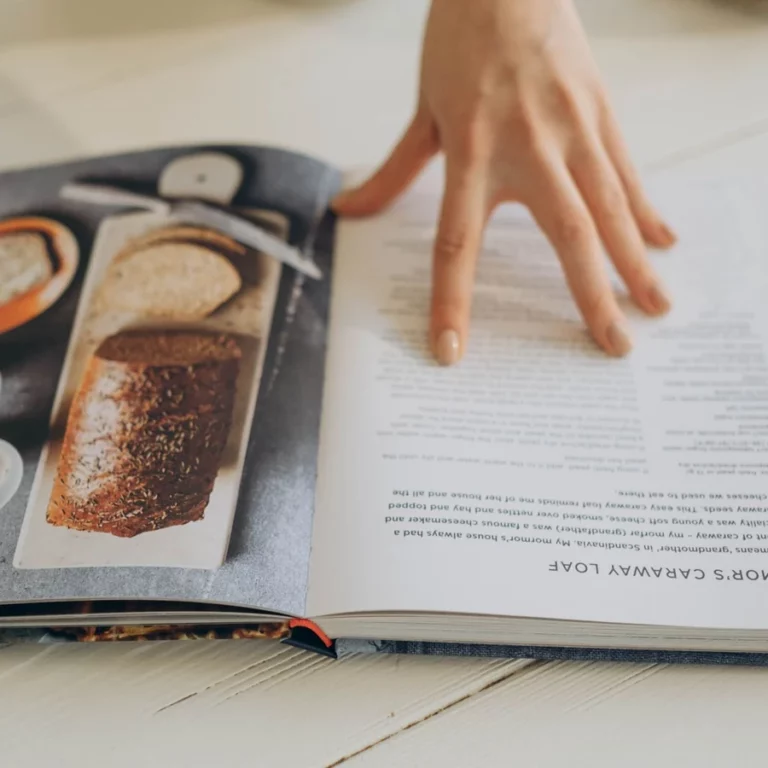
Binding: being able to lie flat
The most important thing for a cookbook is that it is sturdy and durable. So choose a section-sewn hardcover. Would you still like a luxurious, bound look? Then a section-sewn hardcover with a flexible spine is a good middle way.
Paper and finishing
Go for firm paper of 135 to 170 gsm so that photos come across well and pages do not show through. Matt or silk coated paper prevents annoying reflections in the kitchen. Consider a dirt- and moisture-repellent laminate layer on the cover.
Format and layout
- Format: A4 or square 21×21 cm works nicely for recipes with photos.
- Full-colour photography: lets dishes come into their own.
- Generous margins: keep text away from the spine and trim edges.
- Sections: use tabs or colours for a clear overview.
Hesitating between two paper types or bindings? Order a single copy first. With a cookbook you only notice in the kitchen whether it really stays open and whether the paper can take a wet finger.
Having a cookbook printed and published
We are happy to think along with you about the best combination of binding and paper. Because we print from a single copy, you can make a family recipe book as a gift or a larger run for sale. If you want to sell your cookbook through bookshops, you need an ISBN; see the International ISBN Agency. Ready to get started? Have a look at our page for having your cookbook printed.
A recipe that works on the page
A cookbook is read standing up, with messy hands, while a pan is on the heat. That places demands on your layout. Put the ingredients list and the method on the same page or on one spread, so the reader does not have to turn pages with a whisk in hand. Keep the type large enough to read from half a metre away, and number the steps; running text is hard to find again when you look away for a moment.
Put the cooking time, the number of servings and the oven temperature together at the top, always in the same place. Anyone who has used your book a few times then knows immediately where to look. A short heading above the recipe saying what it is and why you make it does more for readability than an extra photo.
Photos in a cookbook
Food photographs best in daylight, from the side or from above, on a calm background. Avoid flash: it makes sauce shiny and vegetables flat. Photograph sharply enough for print at actual size, so at least 300 dpi at the size the photo appears in the book.
Alternate full-page photos with smaller ones. A book in which every page has a large photo becomes tiring and expensive; a book without images does not sell. A common ratio is one full-page photo per recipe, possibly supplemented by a few step photos for technically tricky dishes. Choose matt coated paper of 130 to 170 g/m², so that colours come through well without you staring into a reflection while cooking.
Frequently asked questions about having a cookbook printed
Which binding stays flat open?
A wire-o binding or a sewn spine. Both keep the book open while you cook, so your hands stay free.
Which paper is most practical in the kitchen?
Matt or silk of 135 to 170 gsm, with a matt laminated cover you can wipe clean with a damp cloth.
Can I have one copy printed?
Yes. Ideal for a family recipe book as a gift. The quality is the same as with a large run.