When binding a book, sewing and gluing are the two most common methods. The choice of thread-sewn or adhesive binding determines how sturdy your book is and how well it lies open. Here you can read the difference and when to choose which.
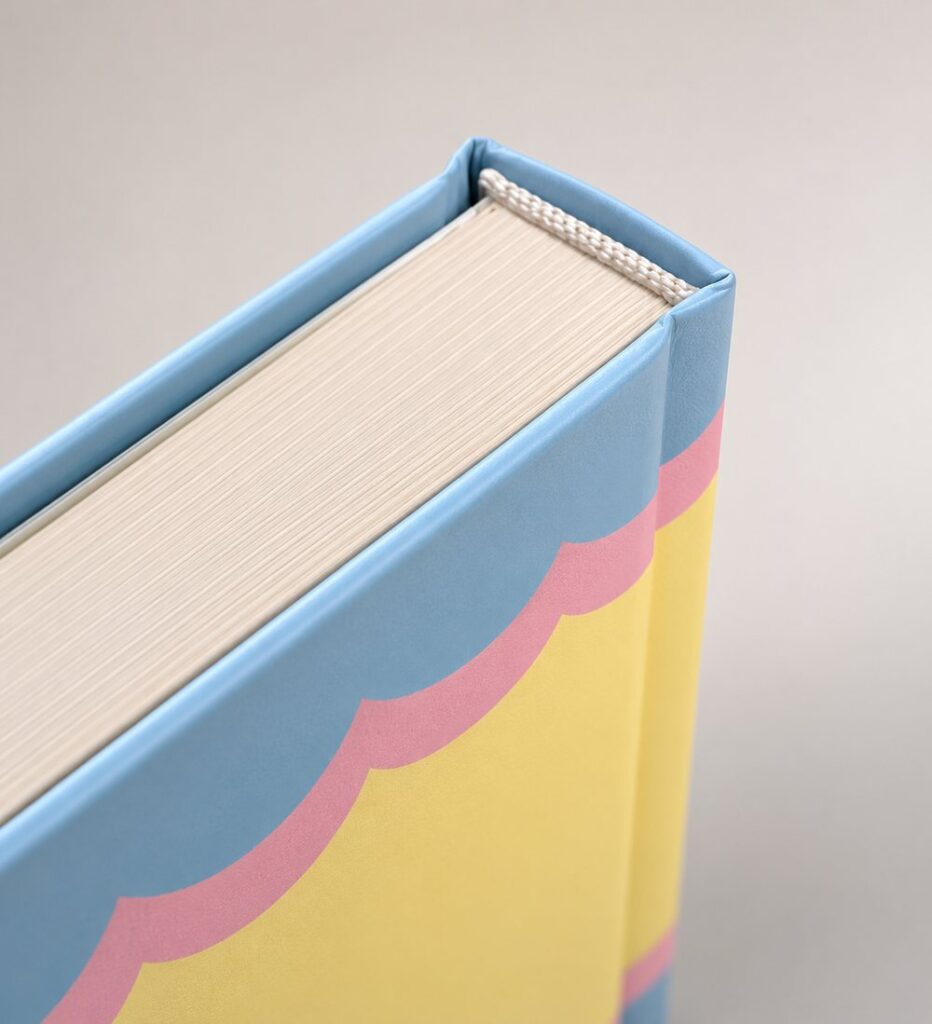
Thread-sewn (sewn book block)
In a thread-sewn book the signatures (sheets of usually 16 pages) are sewn together with thread before they go into the cover. This is the strongest binding: the book lies open better, does not fall apart easily and is ideal for books that are used often or have to last. You can read more background on the various techniques in the encyclopaedic explanation of bookbinding.
Adhesive binding (perfect binding)
In adhesive-bound books the pages are trimmed at the spine and attached to the cover with strong glue (often PUR glue). This method is cheaper and fast, and perfectly suitable for novels, manuals and books with an average number of pages.
When do you choose which?
- Thread-sewn: premium books, hardcovers, thick books, intensive use.
- Adhesive: a sharp price, softcovers, novels and business publications.
Not sure which binding suits your page count and paper type? Ask us for advice; we will recommend the strongest and most economical option for your book.
Thread-sewn or adhesive binding and how the book lies open
An important practical difference: a thread-sewn book lies flatter open, because the sewn spine is more flexible. That is a blessing for a cookbook, a music book or a photo book with spreads across two pages. An adhesive-bound book tends to close, certainly with thinner editions.
For books in which image or text runs across the fold, thread-sewn is therefore often the better choice. You can read more about all bindings in our article on comparing binding methods.
The difference you notice fastest is in how the book lies open. In sewn work the signatures are stitched together with thread and the block hangs loose from the spine; open such a book and it stays put without you having to press it flat. An adhesive-bound book is glued to the spine and wants to snap shut — the more often you open it, the more supple it becomes.
For a novel that hardly matters; you hold it open with one hand anyway. For a cookbook on the worktop, a music book on a stand or a workbook you write in, it is decisive. The same goes for a photo book with images running across the fold: with a glued spine the middle of your photo disappears into the gutter.
Lifespan and price
Sewing takes more work than gluing, so thread-sewn or adhesive binding is also a cost question. A sewn book costs more per copy and takes more time in the bindery. In return it lasts for decades: the thread does not give way, not even when the book is opened hundreds of times or stands for years in a warm room.
A glued spine is more than enough for most publications. Modern glues are strong and flexible, and in normal use you notice no difference. Choose thread-sewn if the book is heavy, used often or meant to be kept, and adhesive binding if price and delivery time weigh more heavily. You can read more about the options in our article on comparing binding methods.
Frequently asked questions about thread-sewn or adhesive binding
What is the difference between thread-sewn and adhesive binding?
Thread-sewn books are stitched with thread and then glued; adhesive-bound books are held together by glue alone. Thread-sewn is sturdier and more durable.
Which binding lies flatter open?
Thread-sewn lies flatter open, because the sewn spine is more flexible. Handy for cookbooks and photo books with double spreads.
Which one is cheaper?
Adhesive binding is cheaper and faster to produce, and therefore usual for novels and larger print runs.