Offset and digital are the two main printing techniques. The difference between offset vs digital lies in how the ink gets onto the paper, and that determines the costs, the speed and what each technique is suitable for. Here you can read exactly how they work.
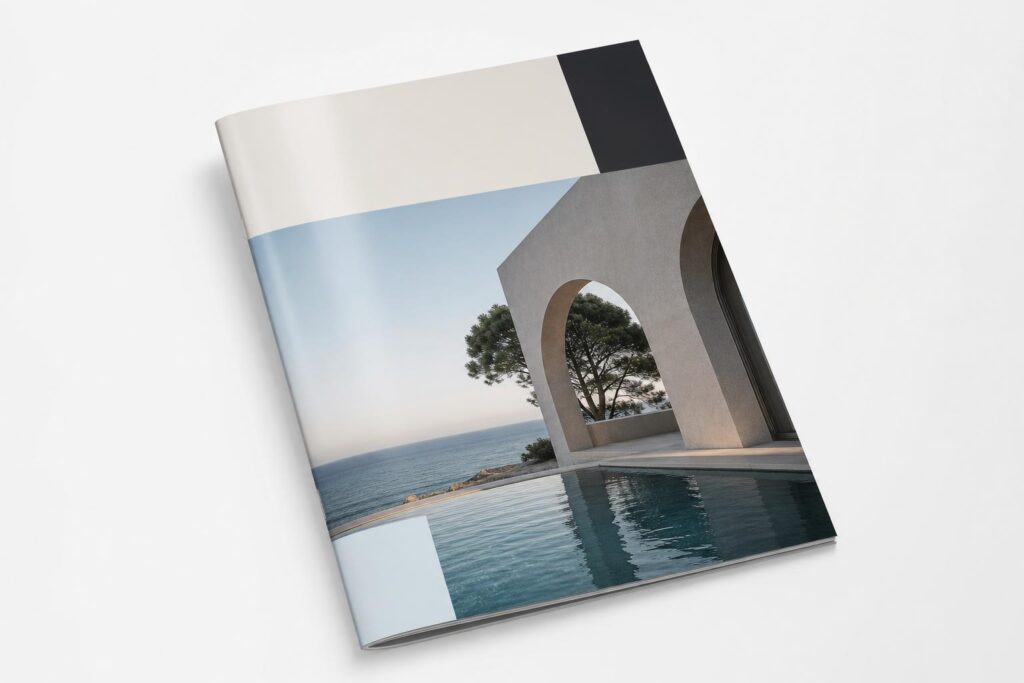
Digital printing
In digital printing your file goes straight from the computer to the press, without printing plates. There are hardly any set-up costs, which makes one or a few copies affordable too. Ideal for small print runs, proofs and print on demand.
Offset printing
In offset, printing plates are made with which the ink is transferred onto the paper via a rubber blanket. Making plates costs time and money (set-up costs), but once the press is running the unit price is low. That is what makes offset economical for large print runs.
The main differences
- Set-up costs: digital low, offset higher (printing plates).
- Unit price: digital flat, offset drops sharply at large quantities.
- Print run: digital for small, offset for large.
- Delivery time: digital is often quicker to start up.
- Quality: both are high-grade; offset offers slightly more control on large, colour-critical runs.
We print both digitally and in offset and automatically choose the technique that is cheapest and best for your print run. In doubt? Ask us for advice.
Does the quality differ?
Offset used to be noticeably better, but that difference has largely disappeared. Modern digital presses deliver quality that is hard to tell from offset with the naked eye. The real difference between offset vs digital lies these days in the cost structure and the print run, not in the end result.
For special spot colours or a very specific colour reproduction, offset still has an advantage. For most books and print work it makes no visible difference in quality. You can read more about spot colours and the PMS system at Pantone.
How the two techniques work
In offset the image sits on a printing plate. That plate transfers the ink first onto a rubber blanket and only then onto the paper — hence the name: the ink is set off, not stamped directly. Every ink colour needs its own plate, so for full colour the paper passes four impressions.
Digital printing skips that step. The press receives the file directly and applies toner or ink straight onto the sheet, sheet by sheet. There are no plates, so no set-up, and every page may be different if need be. That makes personalised print work and runs from a single copy possible.
What does that mean for your book?
- Small run or trial edition: digital. You pay no set-up and can reprint quickly.
- Large run of the same book: offset. The price per copy drops sharply once the plates are made.
- Special or spot colours: offset. There you can work with a separate ink, for instance for an exact brand colour.
- In a hurry: digital. Without plate making your book is ready sooner.
In practice you do not have to make that choice yourself: on the basis of your run, format and paper we determine which technique gives the best result at the sharpest price. If you want to know roughly where the tipping point lies, read our article on the print run at which offset becomes cheaper.
What you do determine is the file. Both techniques ask for the same preparation: a print-ready PDF in CMYK, with embedded fonts and 3 mm bleed. Only with a spot colour is there a difference, because you indicate that separately in your file; let us know in advance and we will take it into account in the calculation.
Frequently asked questions about the difference between offset and digital
What is the biggest difference?
Digital prints straight from your file without preparation; offset uses printing plates. That makes digital ideal for small runs and offset for large ones.
Is offset better looking than digital?
Hardly any more. Modern digital printing is comparable in quality. Offset only still has an advantage for special spot colours.
Which technique is faster?
For small runs digital, because no preparation is needed. For large runs offset, because the press then prints a lot of sheets very quickly.